Water Recycling Systems
ProChem designs custom-tailored water management solutions for industrial water and wastewater applications. Contact us to see how our team can solve your water problems.
The Need For Water Recycling and Reuse
Whatever is behind your need to recycle and reuse wastewater, decreasing your plant's water footprint is beneficial to your company and the community. The need for industrial water recycling and reuse has many drivers, including:
Regulator Requirements
Many industrial sites have wastewater discharge permits that include flow and quality restrictions. Moreover, EPA Industrial Effluent Guidelines are often revised.
Discharge Costs
Sewer and wastewater costs have increased at a higher rate than fresh water costs.
Water Scarcity
Many regions in North America are susceptible to drought. Additionally, some industrial plants have limited access to clean/fresh water.
Fresh water costs
The cost of clean, fresh water is continually increasing, and is impacting all regions.
Sustainability Efforts
Many companies strive towards sustainability by utilizing economically sound programs that help minimize a plant's negative environmental impact while conserving energy and natural resources.
I-ProTM
Membrane Treatment Technology for Industrial Applications - High TDS
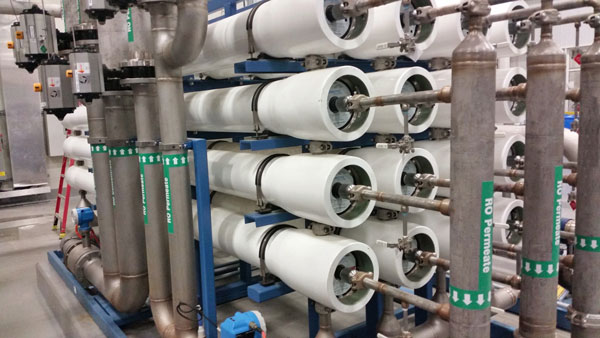
The I-PROTM is industrial grade reverse osmosis equipment that utilizes high pressure to meet the stringent water quality requirements of any facility. An improvement upon standard RO equipment, I-PROTM can treat high total dissolved solids (TDS). The I-PROTM is ideal for discharge compliance, wastewater recycling and reuse, minimal liquid discharge (MLD), and zero liquid discharge (ZLD)
Ideal for the these applications
- Water reuse
- Metals removal
- Glycols removal
- Anion removal (Sulfate & Nitrogen Compounds)
- Ion-exchange pretreatment
- Desalination
- Cleaning/rinsing pretreatment systems
Advantages of the I-PROTM
- Reuse rates of 95% or more
- Flexible design, tailored to specific needs
- Small footprint and end-of-pipe design
- High degree of automation
- Web-based remote monitoring
- Low energy membrane options
- Low fouling membrane options
- Extensive treatment process design